
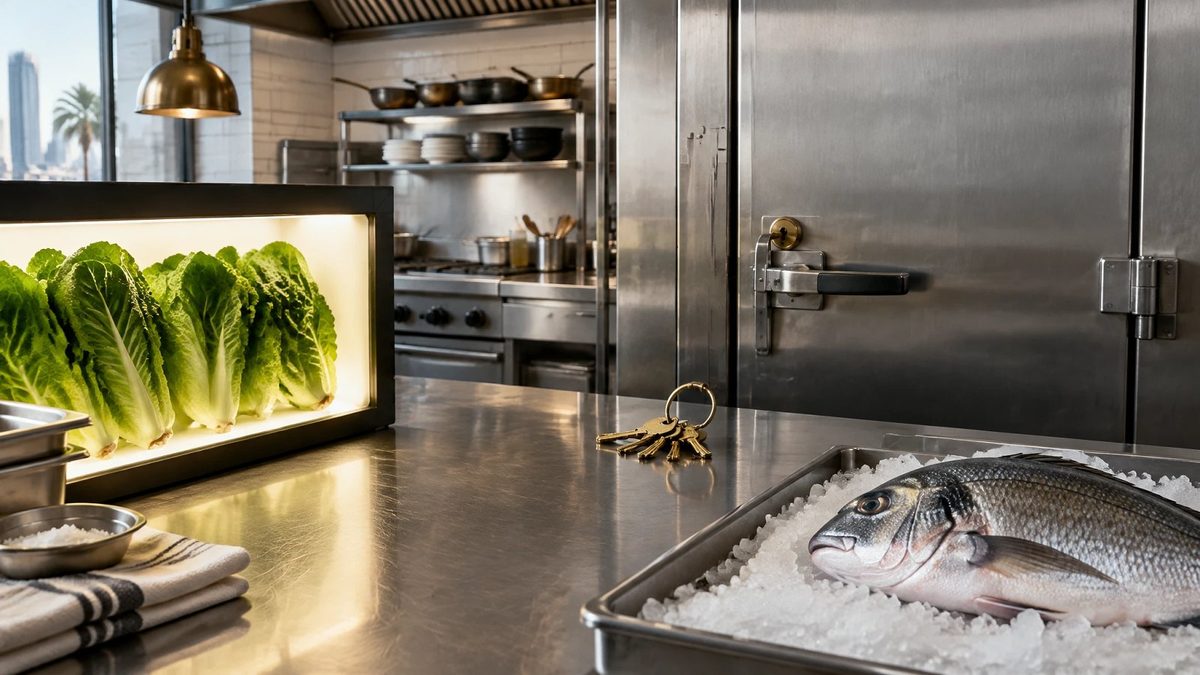
The questions to ask the mashgiach before you book a table come down to twelve. The Chicago Rabbinical Council (cRc), the Orthodox Union (OU), OK Kosher and STAR-K cover the same ground in their published consumer guidance. A mashgiach is the kosher supervisor placed in a restaurant by the certifying body. The certificate on the wall names that body; the mashgiach is the person who enforces its standard at each service. This guide gives the twelve questions, the order for a short, polite phone call, and the answers that should make you book or walk away. The TaamTaam concierge places the call for you, free of charge.
Key takeaways:
- The cRc lists three main jobs for a restaurant mashgiach (ingredients, bishul Yisroel, vegetable inspection); overseeing produce checking alone can take “several hours per day”, per Rabbi Dovid Cohen in December 2023.
- Israel's State Comptroller reported in May 2017 that one kashrut supervisor was paid for 27 hours of work a day, according to The Times of Israel.
- The STAR-K Fresh Fish Policy, updated in July 2025, rules out skinless fillets from an unsupervised source.
- TaamTaam verifies kashrut details for 143+ restaurants across 8 Israeli cities and places mashgiach calls through its free concierge.
What does a mashgiach do in an Israeli restaurant?
The cRc defines the restaurant mashgiach's work as three main jobs: checking ingredients, guaranteeing bishul Yisroel (food that cannot be eaten raw must be cooked with a Jew's participation) and inspecting vegetables for insects. Rabbi Dovid Cohen, Administrative Rabbinic Coordinator at the cRc, adds hafrashas challah, meat and fish separation and the sealing of outgoing deliveries in his December 2023 column Restaurant Mashgiach.
In Israel, a hechsher (kosher certification) comes first from the Rabbanut, the Chief Rabbinate working through local religious councils. A Badatz (Beit Din Tzedek, a rabbinical court that certifies privately), such as Badatz Eda Chareidis or Badatz Beit Yosef, applies its own house standard, and a mehadrin certificate marks a stricter level than regular Rabbanut. Our explainer on the mehadrin vs Rabbanut kashrut difference and the kashrut certification Israel guide cover each level.
Israel's State Comptroller opened its 39-chapter annual report in May 2017 with a critique of local kashrut supervision. The Times of Israel reported that the vast majority of supervisors received their salary from the businesses they supervised, and put the cost of inspections and a certificate for a medium-sized restaurant in the range of NIS 9,500 ($2,500) a year. A five-minute call built on the right questions to ask the mashgiach shows which kind of supervision a given kitchen runs.
Questions to ask the mashgiach by phone: how the call works
Timing decides whether the mashgiach has the minutes to answer. Rabbi Yakov Teichman of OK Kosher describes a supervisor checking leafy greens during service while a meat delivery arrives and a soup pot boils over. Call mid-afternoon, between lunch and dinner, and never on Shabbat or chag. Ask for the mashgiach by name, introduce yourself as an observant guest planning a booking, and say how many questions you have.
Here are the twelve questions to ask the mashgiach, in the order that works on the phone:
- Presence. Are you on site for the whole service, or do you visit on a schedule?
- Keys. Who holds the keys, and what happens to the kitchen overnight?
- Fires. Who lights the stoves and ovens, and can you place my dish on the fire yourself?
- Deliveries. Who receives and checks deliveries when you are off site?
- Meat. Which meat standard does the kitchen buy: glatt, chalak Beit Yosef or regular kosher?
- Meat and fish. How are meat and fish kept apart on the line?
- Fish. Where does the fish come from, and does it arrive with the skin on?
- Leafy greens. How are lettuce and herbs checked, and by whom?
- Challah. Who separates challah from the dough, and when?
- Bread. Are the bread and pastries baked with Jewish involvement?
- Dairy. In a dairy kitchen, is every milk product halav Israel?
- Certificate. Which body certifies you, at what level, and for which dates?
Supervision and access: questions 1 to 4
1. Is there a mashgiach temidi, or are inspections unannounced?
A mashgiach temidi is a supervisor on the premises for the entire time the kitchen operates. Under a yotzei v'nichnas arrangement, the supervisor comes and goes, with visits that are announced or unannounced. Rabbi Dovid Cohen of the cRc warns that if the chef “is able to grab unchecked herbs for a recipe, then the Mashgiach's efforts are largely for naught.” Ask for the hours, opening to closing, or the number of visits per week.
2. Who has keys and what happens overnight?
OK Kosher's account of the day starts with the keys: “Without the mashgiach, the staff has absolutely no access to the kitchen or food storage!” Each morning the supervisor checks that refrigerators, freezers, stoves, gas lines and storage units locked overnight are still secure. My Jewish Learning's explainer states that in restaurants “the mashgiach is in fact the person who literally holds the key to the kitchen.” Ask whether the owner holds a key, whether cleaners work after the mashgiach leaves, and how the kitchen is sealed before Shabbat.
3. Who lights the fires?
Bishul Yisroel decides who turns on the flame. OK Kosher explains that Ashkenazi practice follows the Rema (Rabbi Moshe Isserles), for whom a Jew lighting the fire is enough. Sephardi practice follows the Mechaber (Rabbi Yosef Karo), who requires a Jew to place the food on the fire, a standard called Bishul Beit Yosef. Most agencies follow the Rema and offer Bishul Beit Yosef on request, according to the same article. If you keep Beit Yosef, ask whether the mashgiach will put your dish on the fire himself.
4. Who checks deliveries?
OK Kosher notes that deliveries arrive “as early as 5:00 AM” as well as during peak hours, and the cRc warns that distributors are “notorious for sending ‘substitutes’” when an item is out of stock. Rabbi Dovid Cohen names meat, poultry, cheese and wine as the most sensitive ingredients, because their kosher versions cost much more. Ask whether the mashgiach signs off every delivery.
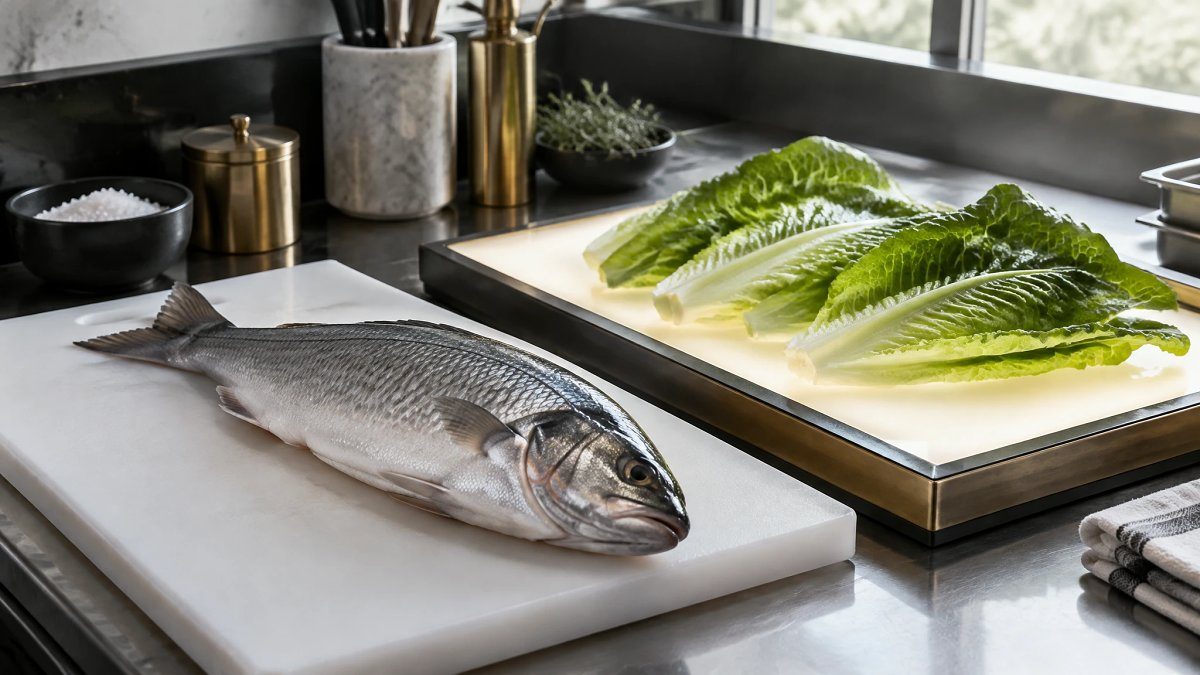
The kitchen questions to ask the mashgiach: meat, fish, produce and dough
5. Glatt and Beit Yosef status of the meat program
Glatt (Yiddish) and chalak (Hebrew) both mean “smooth” and describe lungs free of sirchos, the adhesions that decide whether an animal is kosher. Rabbi Dovid Cohen of the cRc wrote in February 2023 that “meat labeled glatt nowadays is not up to the standard of what Shulchan Aruch/Sephardim expect.” He concluded that meat labelled Beis Yosef is in many cases of a higher standard, “but the details very much depend on the approach of the specific Rav HaMachshir” (the certifying rabbi). In Israel the label reads chalak Beit Yosef. Ask which standard the kitchen buys, under which shechita (ritual slaughter) supervision, and whether every item on the menu meets it, minced meat and sausages included.
6. How are meat and fish kept apart?
Halacha forbids cooking and eating meat and fish together, and the cRc lists their separation among the mashgiach's duties. The OU's food service guidance asks “what safeguards guarantee the vegetables being served are not coming in contact with both the meat and fish.” Ask about separate utensils, grill surfaces and fryer oil.
7. Fish sourcing and whether the skin comes on
The STAR-K Fresh Fish Policy, updated in July 2025, states that a kosher fish needs fins and scales, and that there is “a rabbinic prohibition to consume fish that has had the simanei kashrus (scales) removed (e.g., a skinless fish fillet) without a Yehudi having confirmed that it was a kosher fish.” STAR-K adds that it “does not consider the color of a fish alone (e.g., the red color of salmon) to be a valid siman kashrus.” Ask whether fish arrives whole or with skin on, and which hechsher stands behind any skinless fillet, whether you dine by the water in the Galilee or on the Tel Aviv seafront.
8. Lettuce bug-checking method and visible artifacts
Rabbi Dovid Cohen of the cRc writes that, depending on the menu and how busy the restaurant is, overseeing produce checking can take “several hours per day”, and OK Kosher reports that many places employ a second mashgiach exclusively for checking produce early in the morning. The OU's romaine guidance says that “each leaf must be washed and checked individually” and accepts two methods as equally valid: a light box (a backlit panel on which leaves are examined) or a mesh cloth that catches insects from the wash water. The OU's food service checklist asks: “Are they checking only the first 3 heads from the case?” On a visit, a light box at a dedicated checking station is the visible artifact to look for.
9. Hafrashas challah procedure
Hafrashas challah is the separation of a portion from dough made with a set minimum of flour. The cRc states that “All cRc food service establishments are required to have a religious Jew separating challah from every batter of dough as it is kneaded.” Its backup system keeps a stored tevel dough (dough from which challah was never taken, made with at least 5 pounds of flour) and designates one gram of it as challah for each new batter 30 minutes after kneading. Ask who separates challah and whether a backup arrangement exists.
10. Is the bread pas Yisrael?
Pas Yisrael is bread or pastry baked with Jewish involvement, at minimum a Jew lighting the oven. OK Kosher notes that bread without it remains kosher, while “many individuals are machmir” (strict) and eat only pas Yisrael. Restaurants buying from outside bakeries rely on the mashgiach to check a pas Yisrael sticker or lot number on each box.
Dairy and paperwork: questions 11 and 12
11. Is the dairy halav Israel?
Halav Israel is milk produced under Jewish supervision from the milking onward. Ask whether every cheese, cream and butter in the kitchen meets the standard, imported cheeses included.
12. Which body certifies you, and for which dates?
Ask for the certifying body, the level (regular Rabbanut, mehadrin or a Badatz) and the dates the current certificate covers, then check them against the copy on the wall. Our walkthrough on reading an Israeli kashrut certificate shows where each of those details sits on the document.
Answer patterns: when to book and when to walk away
The table pairs eight of the questions to ask the mashgiach with the answers that support a booking and the answers that call for a pass.
| Question | Answer that supports booking | Answer that calls for a pass |
|---|---|---|
| Presence | On site from opening to closing | Visits a few times a week, no fixed hours |
| Keys | Only the mashgiach opens and locks the kitchen | Owner and cleaners hold keys after hours |
| Fires | Mashgiach lights and relights every flame | Staff turn on the burners |
| Meat | Named standard and named shechita supervision | “It's all kosher” with no standard given |
| Fish | Whole fish or skin-on fillets checked on arrival | Skinless fillets with no known hechsher |
| Lettuce | Light box or mesh cloth, every head checked | Spot checks on a few heads per case |
| Challah | Mashgiach separates every batch, backup in place | Nobody can say who separates it |
| Certificate | Certifier, level and current dates given at once | Hesitation over the dates |
TaamTaam editorial desk: “Ask about the keys first. The answer tells you who controls the kitchen when the mashgiach is not in the room, and every other answer rests on it.”
FAQ: questions to ask the mashgiach
Is it rude to call a restaurant's mashgiach before booking?
No, provided you call outside service hours and keep it brief. OK Kosher's Rabbi Yakov Teichman closes his September 2025 portrait of the job by encouraging diners to thank the mashgiach, noting that “a little acknowledgement goes a long way.” Introduce yourself, say you are planning a booking, keep to the twelve questions and avoid the lunch and dinner rush. Never call on Shabbat or chag.
Which questions to ask the mashgiach matter most on a short trip?
Start with presence and keys. Rabbi Dovid Cohen of the cRc writes that if the owner can enter the store after the mashgiach leaves, the supervisor's efforts are largely for naught. Control of the kitchen comes before any detail about meat, fish or lettuce. On a short trip with one or two dinners out, those two answers plus the certificate dates settle most bookings.
Does a mehadrin or Badatz certificate guarantee a full-time mashgiach?
The certificate level and the supervisor's hours are two separate facts, which is why question 1 exists. Israel's State Comptroller found in May 2017, as reported by The Times of Israel, that one supervisor was paid for 27 hours of work a day. A stricter certificate tells you which standard applies. Only the mashgiach's answer tells you how many hours he spends in that kitchen.
Can the TaamTaam concierge ask these questions for me?
Yes. The TaamTaam concierge is free, handles the booking and calls the mashgiach directly on your behalf. It covers 143+ verified kosher restaurants across 8 Israeli cities, including Tel Aviv, Jerusalem, Caesarea and Herzliya. Each listing already shows the supervising body, the certification level, halav Israel status, vegetable compliance and any separate meat hechsher, so the call focuses on what the listing cannot show.
How TaamTaam puts your questions to the mashgiach
TaamTaam is a kosher-exclusive restaurant guide for Israel.
Free concierge calls. The TaamTaam concierge books tables and puts the questions to ask the mashgiach to the supervisor directly, at no cost to you, across 143+ verified restaurants in 8 Israeli cities.
Per-listing kashrut data. Every listing reports the supervising body, certification level, halav Israel status, vegetable compliance and separate meat hechsher where applicable, independently verified across the Rabbanut, Badatz Eda Chareidis, Badatz Beit Yosef, the OU and other supervisors.
TaamTaam Weekly. Subscribe to the TaamTaam Weekly newsletter for newly verified listings, kashrut notes from our editors and scenario guides such as our kosher date night Israel guide.
Conclusion
The cRc, the OU, OK Kosher and STAR-K point to the same checkpoints: presence, keys, fires, deliveries, meat standard, fish skin, lettuce checking and challah. Ask the questions to ask the mashgiach in that order, and pass on any kitchen where nobody can say who holds the keys.
Save the twelve questions to ask the mashgiach on your phone before the trip, start with the keys, and let the TaamTaam concierge place the call when your Hebrew runs short.
Also worth reading:
- Reading an Israeli kashrut certificate the way a mashgiach reads it
- Kashrut certification Israel guide
- Mehadrin and Rabbanut, what actually changes between the two
- A serious editor's guide to kosher date nights in Israel
Sources:
- Restaurant Mashgiach, cRc Consumer Kosher, 2023
- Glatt and Beis Yosef, cRc Consumer Kosher, 2023
- Backup Hafrashas Challah, cRc Consumer Kosher, 2022
- Food Service Hashgacha, OU Kosher, 2005
- Assuring Insect-Free Romaine Lettuce, OU Kosher
- A Day in the Life of a Foodservice Mashgiach, OK Kosher, 2025
- What Does A Mashgiach, or Kosher Supervisor, Do?, My Jewish Learning
- STAR-K Fresh Fish Policy, STAR-K Kosher Certification, 2025
- Comptroller slams corrupt kosher supervision process, The Times of Israel, 2017
- Kashrut supervision so bad public is being misled, watchdog report says, The Jerusalem Post, 2017