
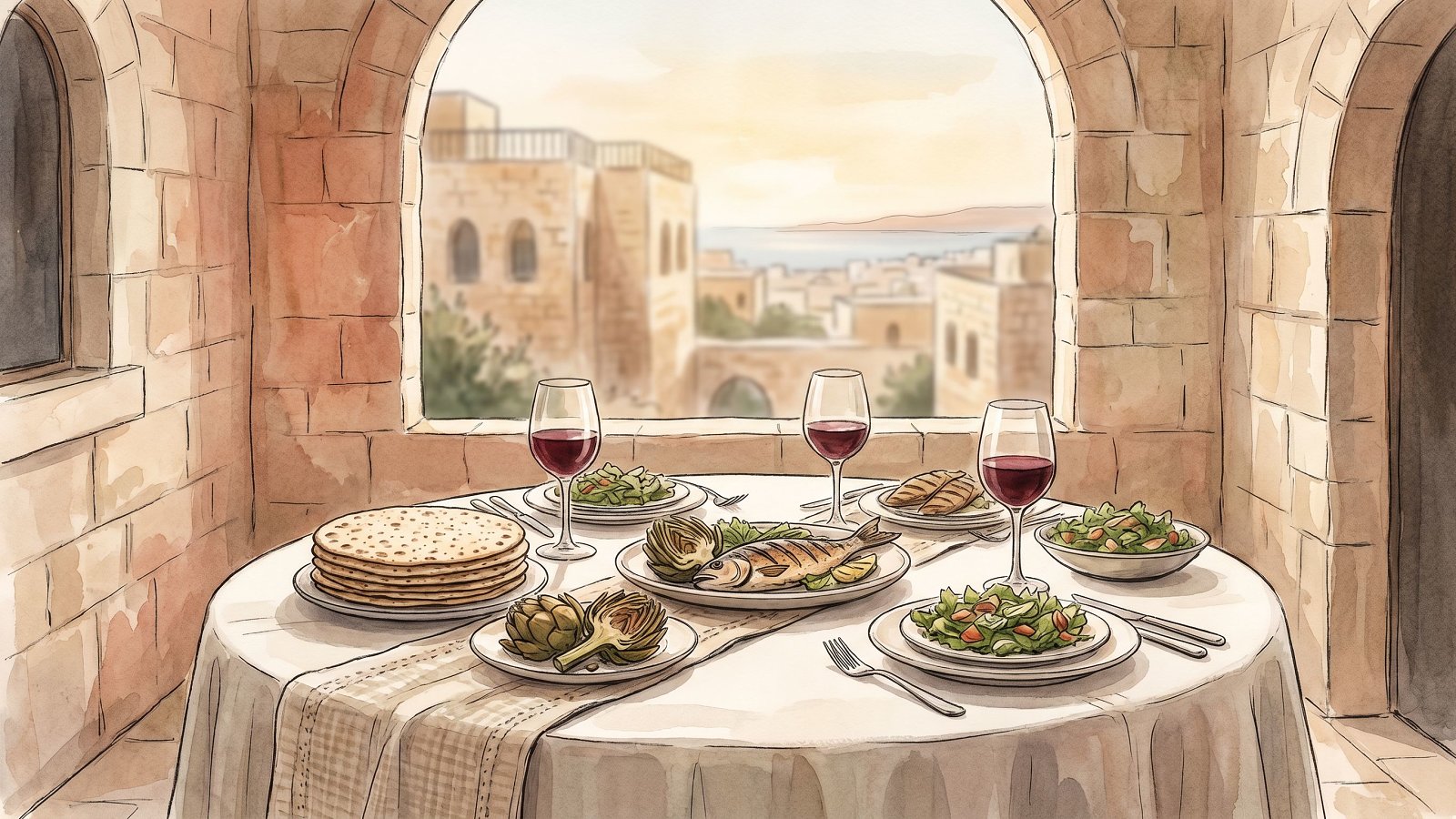
Chol hamoed Pesach is the single busiest restaurant week in Israel, and the most exacting. Pesach dining out Israel chol hamoed rewards the diner who books early and reads a menu like a mashgiach, and it punishes everyone who waits past Purim. Over chol hamoed (the intermediate weekdays of Passover when cooking and dining out are permitted), kitchens are kashered for the festival, kitniyot policy shifts room by room, and the best tables in Tel Aviv and Jerusalem fill weeks ahead. The plan below for pesach dining out Israel chol hamoed walks the kitniyot question by minhag (established communal custom), names the rooms that adapt seriously, profiles two northern hotel programs, and sets a booking timeline that runs from Purim to the seder night.
Key takeaways
- Debbie Kandel's Debbest guide compiled more than 500 kosher-for-Pesach establishments across Israel for 2026, yet premium rooms and hotel dining rooms fill weeks before chag.
- Ashkenazi and Sephardi minhag split on kitniyot (legumes, rice, corn and pulses): STAR-K traces the Ashkenazi stringency to 13th-century Eastern Europe, while Sephardim follow the Bais Yosef and eat them.
- eLuna listed only 27 restaurants open across the whole country on chol hamoed 2025, with 10 in Jerusalem and 5 in Tel Aviv, so open supply is far thinner than a normal week.
- The four answers a kitchen gives on kitniyot and gebrokts decide whether a room fits your table; ask before you book, not on arrival.
- April 2025 drew roughly 80,000 inbound visitors around Passover and Easter, and Jerusalem hotels historically run between 90% and 95% occupancy over the chag.
"On chol hamoed the menu tells you less than the mashgiach does. The only question that matters is what the kitchen kashered, and which minhag it cooked for." TaamTaam editorial desk
How to read a Pesach menu and what to ask the mashgiach before booking
A Pesach menu looks like an ordinary one until you test it. The festival turns over the kitchen, swaps the supervision paperwork, and narrows the pantry, so the hechsher (the kosher certification mark issued by a supervising body) you trust in Tishrei can read differently in Nisan. Before you book pesach dining out Israel chol hamoed, call the room and put six questions to the mashgiach (the on-site kashrut supervisor who vouches for the kitchen).
- Supervision in writing. Which body certifies the Pesach operation: Rabbanut (the state rabbinate's standard certification), Mehadrin (a stricter rabbinate tier), or a Badatz (an independent ultra-Orthodox court such as the Eda Chareidis)? The festival certificate is dated for Pesach specifically.
- Kitniyot policy. Does the kitchen cook kitniyot, and if so does it plate a separate no-kitniyot section for Ashkenazi guests?
- Gebrokts. Is matzah kept dry, or does the kitchen use matzah meal in batters and dumplings?
- Glatt and meat. Is the meat Glatt (a stricter standard for the smoothness of the animal's lungs), and is the room meat, dairy, or running both on separated lines?
- Halav Israel. For dairy rooms, is the milk Halav Israel (dairy supervised from the moment of milking)?
- Hours and timing. Is the room serving lunch only on chol hamoed, and does it close for the first and last days of chag?
Get those six answered and the rest of the booking is logistics. The questions matter more over Pesach than any other week, because the same room can change its kitniyot and gebrokts answer year to year.
Kitniyot, gebrokts, and the four answers a restaurant gives you
The kitniyot question is where most pesach dining out Israel chol hamoed bookings go wrong. Kitniyot are legumes, rice, corn and pulses that, per STAR-K, "can be cooked and baked in a fashion similar to chometz grains, yet are not halachically considered in the same category as chometz." Ashkenazim avoid them following the Rama; Sephardim eat them following the Bais Yosef. STAR-K notes the stringency reflects guidance from Rabbi Yosef Shalom Eliyashiv and Rabbi Shlomo Zalman Auerbach, who treated kitniyot as a Chumra d'Pischa, a Passover stringency. Chabad.org dates the Ashkenazi custom to rabbis in 13th-century Eastern Europe who worried legumes grew near, and could be confused with, chametz grain.
Gebrokts (Yiddish for "broken," meaning wet matzah) is the second axis. Gebrokts-avoiding kitchens keep matzah away from liquid, so no matzah balls and no matzah-meal coating. A room answers your two questions in one of four ways.
| Kitchen answer | Kitniyot | Gebrokts | Who it suits |
|---|---|---|---|
| Full Sephardi | Cooks kitniyot | Often uses matzah meal | Sephardi diners and kitniyot-eating families |
| No-kitniyot, gebrokts | No kitniyot | Uses matzah meal | Most Ashkenazi diners |
| No-kitniyot, non-gebrokts | No kitniyot | Dry matzah only | Strict Ashkenazi and many Chassidic guests |
| Mixed line | Separate kitniyot section | Labeled per dish | Mixed-minhag tables |
The Jewish Chronicle's 2025 round-up by Debbie Kandel flags each room's status directly: Black Iron in Jerusalem and Darya at the Hilton Tel Aviv run no-kitniyot, while most of the hotel dining rooms it lists cook kitniyot. Confirm the answer for your minhag before you reserve, because a single wrong assumption ends a chag meal at the door.
Pesach dining out Israel chol hamoed: Tel Aviv's serious rooms
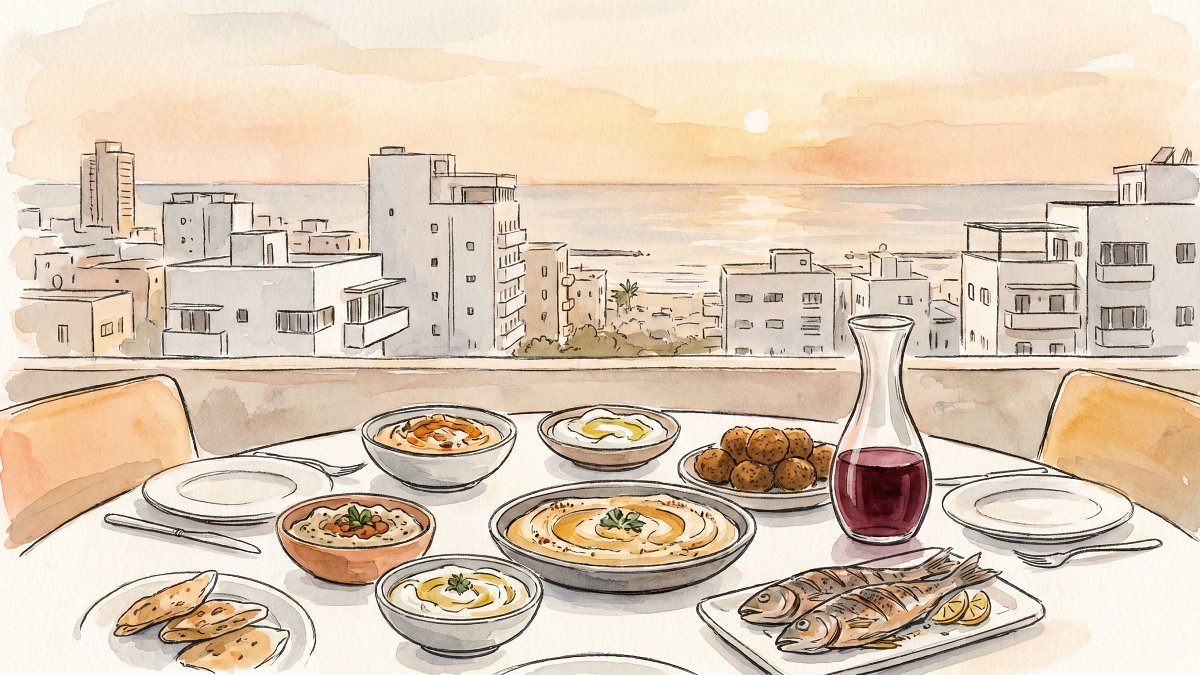
Tel Aviv keeps fewer kosher rooms open on chol hamoed than its size suggests, so pesach dining out Israel chol hamoed in the city starts with the few that commit. Darya at the Hilton Tel Aviv, a no-kitniyot room under hotel supervision, runs a Far Eastern and Mediterranean menu that the Jewish Chronicle called "the most interesting kosher restaurant I have ever eaten in." West Side at the Royal Beach is a formal meat room that cooks kitniyot; Manara at the Sheraton plates Levantine fish. Chef Eyal Shani's Dvora at the Debrah Brown Hotel runs a kitniyot meat menu for diners who want a name kitchen over chag.
These are kosher fine dining israel rooms in the literal sense: hotel-anchored, reservation-only over Pesach, and quick to fill. For a slower evening that ends at a table, our guide to a neve tzedek slow walk that ends at a real kosher table pairs a neighborhood route with a booking worth holding.
Jerusalem kosher rooms that publish a real chol hamoed menu
Jerusalem is the deepest market for pesach dining out Israel chol hamoed, with eLuna alone listing 10 of its 27 chol hamoed rooms in the city for 2025. Black Iron, a no-kitniyot steakhouse near the Machane Yehuda shuk, plates wagyu and grass-fed cuts. Jacko's Street runs a no-kitniyot chef's menu across vegetarian, fish and meat. Cafe Ramban in the Ramban Hotel serves Middle Eastern dairy and fish under a kitniyot policy, and KumKum Tea House in Baka, under Tzohar supervision, keeps a kitniyot British tearoom going with garden seating. Super Hamizrah in Baka runs an Asian kitniyot menu.
The pattern is clear: Jerusalem's no-kitniyot rooms cluster near the center and the shuk, while Baka holds the relaxed kitniyot cafes. For an anniversary or milestone over the chag, our roundup of anniversary tables in Jerusalem worth the drive from Tel Aviv maps the rooms that earn the trip.
Boutique hotel programs in the North for a chol hamoed weekend
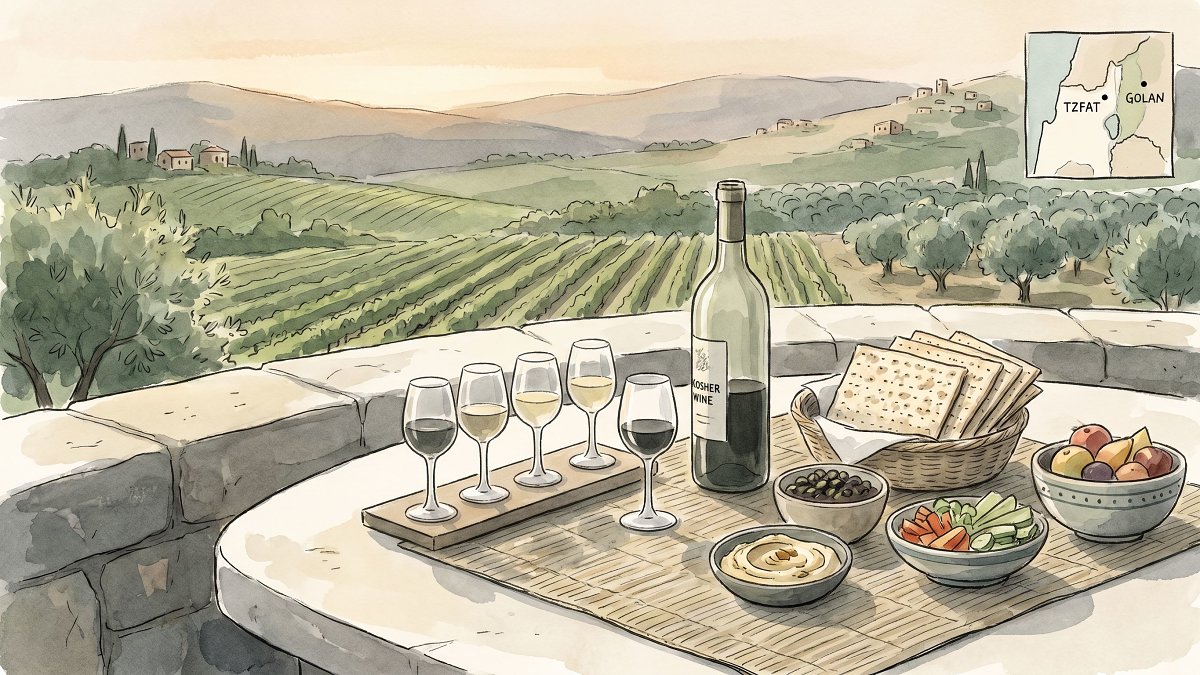
The North turns chol hamoed into a weekend rather than a single dinner. A boutique-hotel Pesach program bundles a kashered kitchen, a full chag (festival day) meal plan, and a base for the Galil, and it settles the kitniyot and gebrokts question once for the whole stay. Gillis Steak House in the Southern Golan, a Mehadrin no-kitniyot room on a working cattle farm, anchors a carnivore weekend; BP Bistro in Haifa runs a kitniyot American menu for families breaking up the drive. Tzfat and Tiberias add table-and-view evenings within reach of the same base, which reframes pesach dining out Israel chol hamoed as a stay, not a scramble for one reservation. Debbie Kandel's Debbest guide counts more than 25 kosher wineries open for tastings and meals over Pesach 2026, several of them in the Galil and near Zichron Yaakov, which turns a northern weekend into a wine route. For the slower seasonal version of the same region, see our guide to lag b'omer dinners in Tzfat and Tiberias before the bonfires.
Booking timeline: pesach dining out Israel chol hamoed from Purim to the seder
The single rule of pesach dining out Israel chol hamoed is that the calendar, not the menu, decides whether you eat well. eLuna's whole-country list ran to just 27 rooms on chol hamoed 2025, a fraction of a normal week's supply: Jerusalem held 10 of those open rooms (37%) and Tel Aviv 5 (about 19%). April 2025 pulled roughly 80,000 inbound visitors around Passover and Easter, North American arrivals alone rose 39% year on year in the first quarter of 2025, and Jerusalem hotels historically run between 90% and 95% occupancy over the chag. Demand vastly outruns the open rooms, so the booking sequence is the whole game.
- Purim, about a month out. Decide city, minhag fit, and meat or dairy. Hotel dining rooms open their Pesach reservations now.
- Two to three weeks out. Confirm the mashgiach answers above and lock prime-time slots; Friday and chol hamoed lunch go first.
- The week before chag. Reconfirm, since rooms still decide late whether to open, as both Debbest and YeahThatsKosher warn every year.
- Chol hamoed itself. Hold a same-day backup, because walk-in capacity is effectively zero at the rooms worth eating in.
Anyone who starts at Purim eats at the rooms above; anyone who starts during chol hamoed eats at home.
How TaamTaam books your chol hamoed table
TaamTaam exists to make pesach dining out Israel chol hamoed a booking, not a gamble. We verify kashrut at the listing level and secure the table for you, free, through a concierge that speaks to the room and the mashgiach directly.
Verified certification. Every one of our 143-plus listings across 8 Israeli cities reports its supervising body, certification level, Halav Israel status and separate meat hechsher, so you confirm minhag fit before you ever call.
Direct mashgiach access. Our concierge puts the six questions above to the supervisor on your behalf and reports the kitniyot and gebrokts answer back to you in writing.
One booking, no coupons. Unlike coupon-led directories, we hold no paid placement and run no vouchers; we simply hold the reservation. Tell us your minhag, your city and your dates, and we book the chol hamoed table that fits.
FAQ: questions on eating out over Pesach in Israel
When does pesach dining out Israel chol hamoed get fully booked?
Prime-time and chol hamoed lunch slots at hotel dining rooms and the named Tel Aviv and Jerusalem rooms typically fill two to four weeks before chag. eLuna listed only 27 rooms open countrywide on chol hamoed 2025, so the open supply is small and demand from roughly 80,000 Passover-period visitors clears it fast. Book by Purim for the best rooms.
How do I know if a restaurant cooks kitniyot?
Ask the mashgiach directly; do not infer it from the menu. The Jewish Chronicle and eLuna both label each room's kitniyot status because it is not visible from the dishes. A kitchen will tell you whether it cooks kitniyot and whether it plates a separate no-kitniyot section for Ashkenazi guests, and reputable supervisors put the policy on the Pesach certificate itself.
Are Tel Aviv or Jerusalem better for kosher Pesach dining?
Jerusalem has the deeper open-room market: eLuna placed 10 of its 27 chol hamoed rooms there in 2025, against 5 in Tel Aviv. Jerusalem's no-kitniyot rooms cluster near Machane Yehuda and the center, while Tel Aviv's open rooms are mostly hotel-anchored, like Darya at the Hilton and West Side at the Royal Beach. Choose by minhag and neighborhood.
What is gebrokts and does it limit where I can eat?
Gebrokts means wet matzah. Some Ashkenazi and most Chassidic diners avoid letting matzah touch liquid, so a gebrokts-free kitchen skips matzah balls and matzah-meal batters. It narrows your options, because many kitniyot-cooking rooms also use matzah meal. If you keep non-gebrokts, confirm the kitchen keeps matzah dry before booking.
Do kosher restaurants in Israel close for the chag days of Pesach?
Most do. The first and last days of Pesach are full chag, so kosher rooms serve only on chol hamoed, the intermediate weekdays, and many run lunch only. TaamTaam never publishes or books for Shabbat or chag, and confirms each room's chol hamoed hours before reserving. For the next dairy-forward holiday on the calendar, our guide to shavuot dairy nights in Tel Aviv and Jerusalem when you don't want to cook maps the rooms that open for it.
Is dining out over Pesach more expensive than a normal week?
Usually yes. Pesach menus run prix-fixe at hotel dining rooms, capacity is capped, and demand sits at its annual peak, so prices run above a regular week. Booking by Purim secures both the slot and the better rate, since late availability skews toward premium rooms only.
Conclusion
Pesach dining out Israel chol hamoed is a planning problem before it is a taste one. Settle your minhag on kitniyot and gebrokts, put the six questions to the mashgiach, choose a city, and book by Purim, and the busiest restaurant week in Israel turns into the easiest. TaamTaam handles the verification and the booking, so your chol hamoed table is confirmed before the rooms fill.
Sources
- Ultimate Kosher Pesach Restaurant List 2026, Open Chol Hamoed Passover : YeahThatsKosher, 2026
- Kosher for Pesach Restaurants in Israel 2026 : Debbest, Debbie Kandel, 2026
- Heading to Israel for Pesach? Here are 18 kosher restaurants to try : The Jewish Chronicle, 2025
- eLuna Restaurants Open On Pesach 2025 : eLuna, 2025
- Understanding Kitniyos : STAR-K Kosher Certification, 2023
- Kitniyot : Chabad.org, 2022
- Israel Tourist Arrivals : Israel Central Bureau of Statistics, 2025
Related reading