
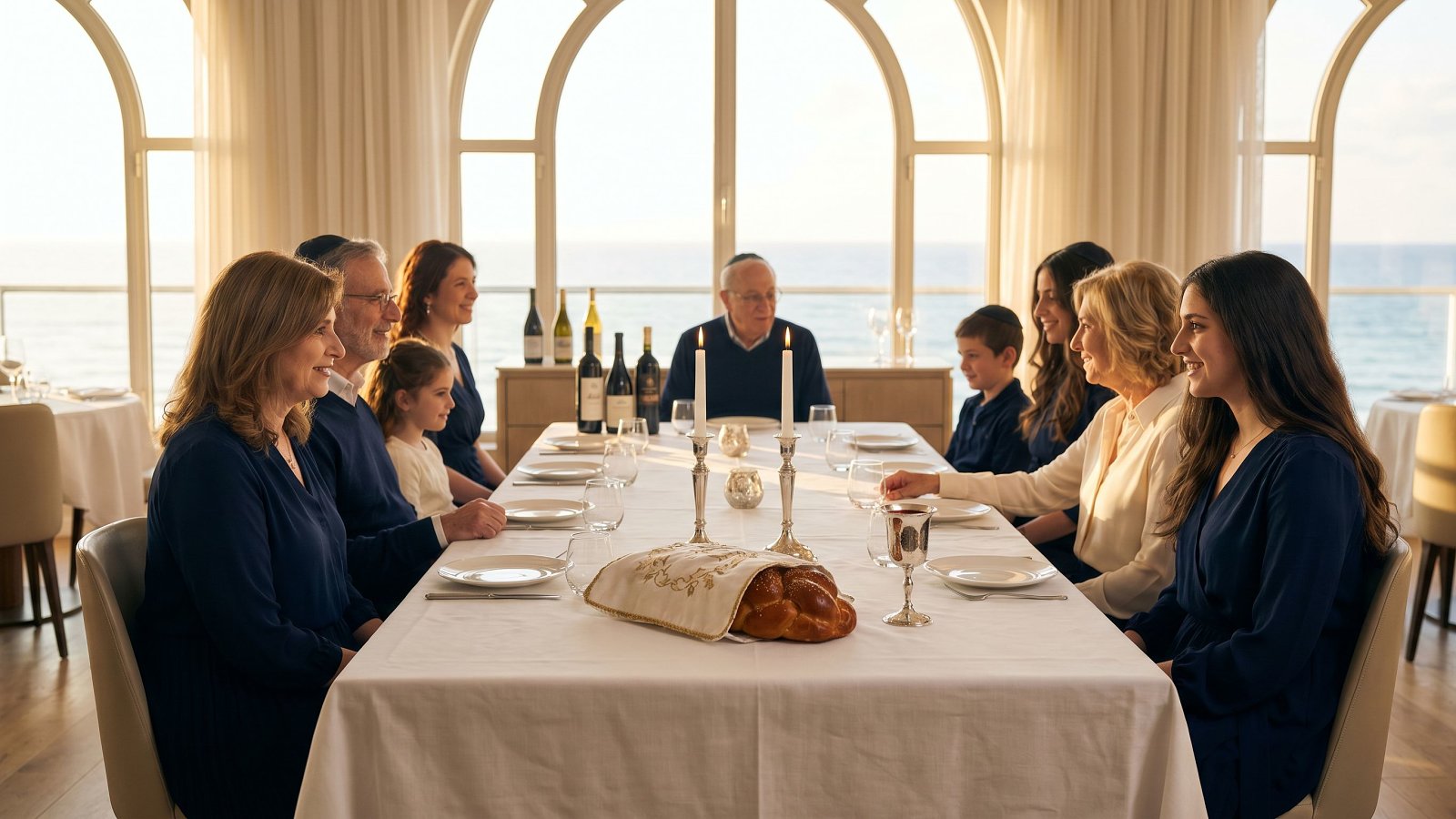
Kosher occasion dining Israel is a different problem from finding any kosher table in Tel Aviv. The occasion sets the brief before the cuisine does: a first date that needs eye contact and not menu negotiation, a 40th birthday where the table has to seat the grandmother who keeps strict Edah HaChareidis and the cousin who keeps Rabbanut, a Tuesday business meal that has to read serious to a Frankfurt counterpart, the second night of Sukkot under a roof of palm fronds. TaamTaam's directory currently lists 143 verified kosher restaurants across 8 Israeli cities, and every recommendation in the kosher occasion dining Israel family starts from the same question: what is the occasion, and which room earns it. This pillar maps the four hubs in the Occasions family and tells you, in one read, which next article holds the table you actually want.
Key takeaways:
- The vast majority of kosher hotel a la carte restaurants in the Tel Aviv area close on Friday evening, per Plan it Israel; Shabbat dining moves to the hotel buffet and must be booked 3 to 5 days ahead during holiday seasons.
- The Edah HaChareidis Badatz, Israel's most prominent private kashrut court, requires the mashgiach on premises most of the time, glatt-and-above meat, and bug-free leaf inspection: a different operational bar than Rabbanut, which is why a four-generation table needs the supervisor named in advance.
- Ontopo lists 11 chef-led kosher kitchens in Tel Aviv bookable in real time, but the most occasion-sensitive ones (anniversary corners, rooftop two-tops, sukkah seats) still close by phone the day-of.
- TaamTaam's free concierge calls the mashgiach directly when a guest needs Chalav Yisrael dairy, separate-meat hechsher, or a confirmed Mehadrin standard that the website does not display.
- The four occasion hubs (Date Nights, Family Tables, Business and Solo, Holidays and Lifecycle) cover the moments where the kosher occasion dining Israel answer is not the same as the general-Israeli answer; this article points to the right next read for each.
Why this family needs its own editorial map in TaamTaam
The general restaurant press already has Tel Aviv covered: Tourist Israel's 2026 kosher guide names Malka, Goshen, Meatos, Rashel, Ocean Grill, and Katzir without much hierarchy, and Secret Tel Aviv ranks the same houses by cuisine. The Ontopo booking layer lists roughly 11 chef-driven kosher rooms in Tel Aviv at any given moment. None of those sources sequences the city by the occasion the diner is actually planning, which is the editorial gap that kosher occasion dining Israel as a discipline exists to close.
Observant diners run two parallel filters when they pick a kosher table. The first is the occasion filter: is this a first date, a wedding anniversary, a corporate dinner with non-Jewish guests, a Friday night with extended family, a chol hamoed lunch with five children under 10? The second is the kashrut filter: which hechsher is on the door, who supervises the kitchen, is it Chalav Yisrael for the dairy course, does the meat carry a separate Mehadrin certification on top of the house Rabbanut. A guide that treats one filter without the other fails one half of the room. The kosher occasion dining Israel discipline runs both filters in parallel, and this pillar's job is to surface both and to point you at the article that answers the specific occasion you are booking.
The four occasion hubs were chosen by what actually fills the TaamTaam concierge inbox. Date nights and romantic evenings, including the first-date kosher table in Tel Aviv that doesn't feel like a job interview, are the single largest category. Family tables, with grandparents who keep stricter standards than parents, drive the second largest. Business and solo travel, especially for observant diners flying in for three nights and needing one breakfast, one lunch with a client, and one steak alone, is the third. Holidays and lifecycle moments, from a Sukkot meal in a halachically valid sukkah to a sheva brachot dinner for 18, is the fourth. Each hub will eventually carry its own pillar; this master pillar makes the case for the family as a whole, and tells you which next read fits your evening on the kosher occasion dining Israel map.
Kosher occasion dining Israel hub 1: Date nights and romantic evenings
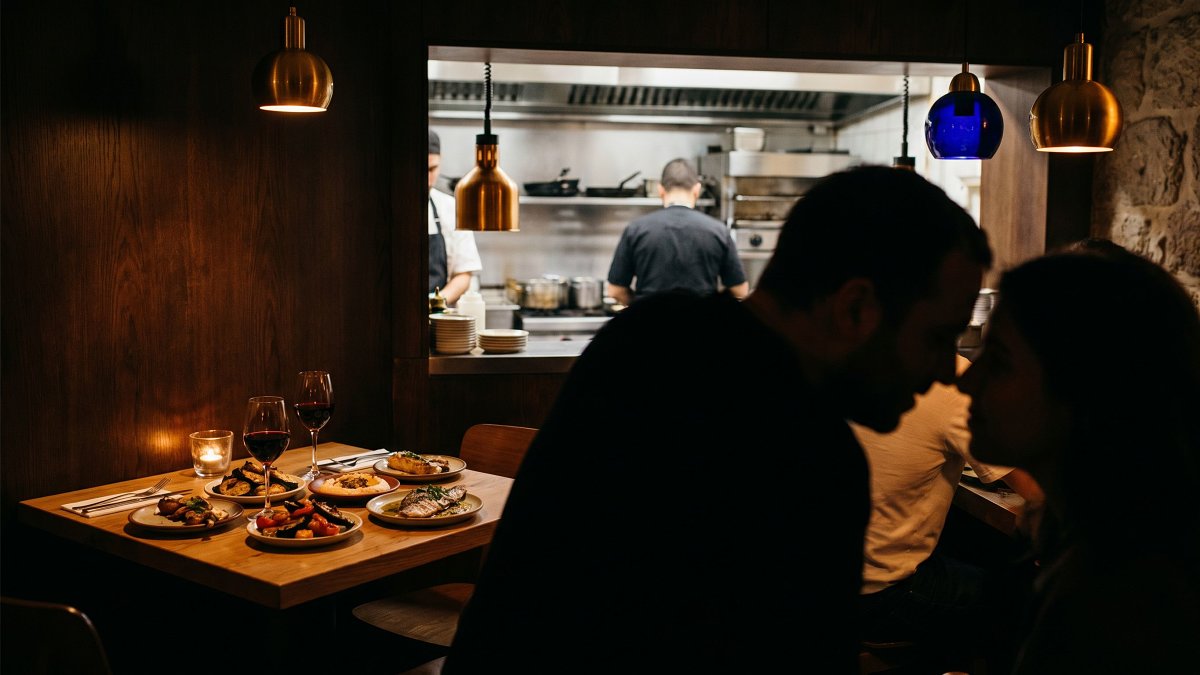
The single most common booking the TaamTaam concierge runs is a date night. The criteria for a date inside the kosher occasion dining Israel frame are quieter than for a corporate dinner: a room where the table-for-two does not sit 50 cm from a stroller, a kashrut standard the more observant of the two is comfortable eating from, a wine list with at least one credible Israeli boutique label, and a soundtrack that does not require shouting. Within 8 km of central Tel Aviv there are about 25 kosher rooms that meet those four conditions. The hub article in this family will walk through them in detail; the short version is below.
West Side at Royal Beach Hotel on the Tel Aviv promenade is the safe pick for sunset (Rabbanut Mehadrin, sea view, classic French-Mediterranean technique). Goshen in central Tel Aviv runs a kosher meat bistro with warm wood and tight tables, the kind of room where a bar seat on a kosher date in Tel Aviv reads as confident, not lazy. Wine Garden in Nahalat Binyamin is the wine-and-cheese answer when the conversation needs another hour, run by Chef Lidor Edri with kosher Mediterranean small plates designed for sharing across the table. Ocean Grill on top of the Setai Jaffa is the rooftop pick when the date wants the Mediterranean view and the Jaffa horizon at once, and the rooftop sunset dinner for two on the Tel Aviv coast article walks through the alternatives if Setai is fully booked.
Jerusalem is the under-rated date city for the kosher occasion dining Israel reader living in Tel Aviv. The drive is 65 km of Highway 1 and the dining temperature shifts: rooms feel older, the wine pours deeper, the tables stay quieter past midnight. 02 at the Inbal Hotel, between the German Colony and Talbiye, is the room the anniversary dinner Jerusalem kosher article opens with. Chef Avraham Freizen runs a Rabbanut kosher kitchen with Mehadrin available on request, the terrace looks out over Liberty Bell Park and the Montefiore Windmill, and the kitchen reads as a French bistro spliced with a New York steakhouse. Mako, the Israeli media group, named 02 one of the top 20 restaurants in Israel in its most recent annual ranking, which is rare for a hotel kosher meat room.
Date-night kashrut is a quiet conversation that has to happen before the booking, not after. If one of the two keeps Edah HaChareidis Badatz and the room is Rabbanut, the right move is to call the mashgiach and ask which dishes the kitchen will prepare on a separately supervised tray; many kitchens do this without listing it on the menu. The concierge handles that call by default. The Date Nights hub will publish its own pillar within the year, and will sequence rooms by what they actually do well rather than by cuisine.
Kosher occasion dining Israel hub 2: Family tables and multi-generational dining
A family of 9 to 14 with three generations at the table is the booking that breaks most kosher restaurants in Israel. The constraints stack: high chairs for the toddlers, real menus for the teenagers, a kashrut standard the grandmother will not negotiate on, salad bowls big enough to share, a noise level the great-grandfather can hear over. Around 30% of restaurants on the TaamTaam directory can credibly take a table of 12 with two booster seats and a grandmother who keeps Chalav Yisrael; the right ones are scattered across Tel Aviv, Jerusalem, and the coast, and the kosher occasion dining Israel family-tables hub will publish the full short list.
Kid-friendly does not mean compromising on kashrut. Kosher in Tel Aviv names Kaspi for the hummus lesson the eight-year-old needs, Bar Gurion for the schnitzel-burger-pasta circuit that keeps a six-year-old eating, HaKosem for shwarma and falafel with kid-sized portions, Cafe Xoho for pancake-for-dinner therapy, and Nini Hachi for older children who already know what they want from a noodle bowl. Florentina and Avazi both take large family bookings, both run kosher under Rabbanut, both serve portions that survive 14 people sharing.
Jerusalem owns the multi-generational Shabbat meal in the kosher occasion dining Israel calendar. Plan it Israel's kosher Jerusalem guide confirms what the concierge sees in the booking patterns: the King David, the David Citadel, the Inbal, and the Waldorf Astoria Jerusalem are the four hotels that take a family of 14 for a Friday night Shabbat buffet without flinching. The Inbal in particular publishes a Shabbat menu rotating braised beef, goulash, roast chicken, Moroccan fish, and cholent, which gives every generation something they grew up with. Hotel Shabbat meals require booking 3 to 5 days ahead during chag periods; same-day phone calls almost never get through.
The Coastal answer is the Tel Aviv Port and the Caesarea-Herzliya corridor. Lechem Besher on the Tel Aviv Port boardwalk is the kid-and-grandparent pick when the family wants the smell of sea air with the meal, baked bread on premises, and 6 m of family table along the window. The Tel Aviv Port at sundown kosher walking route article in the Itineraries family will sequence the three Port rooms that take large family bookings; the Caesarea side is more limited, with the Dan Caesarea's kosher dining room as the practical default. Family bookings benefit most from the TaamTaam concierge because the supervisor and the high chair availability and the dessert allergy are all one phone call, not three.
Kosher occasion dining Israel hub 3: Business and solo travel dining
The observant business traveler arriving in Israel for three nights runs a tight schedule: one breakfast (usually the hotel, kosher and included), one client lunch where the food matters but the conversation matters more, one client dinner where the room has to read serious, one steak alone after a 14-hour day. The kosher requirement narrows the room list, the business requirement narrows it further, and the kosher occasion dining Israel hub for business pulls out the rooms that survive both filters. Around 12 rooms in central Tel Aviv credibly host a kosher client dinner where the menu, the wine list, and the noise floor all work for a corporate guest.
West Side at the Royal Beach Hotel is the default business pick when the meeting matters. The room reads upscale, the sea-view balcony reads memorable for a non-Israeli guest, the menu has enough range to handle a dairy-keeping European and a meat-only American at the same table by switching the dining-room booking to the appropriate kitchen. Bistro Lily 24 in central Tel Aviv runs Glatt Kosher Mehadrin with an Israeli Mediterranean menu and a quieter business-lunch room; the kitchen handles a working meal at 13:30 well. Pankina offers a midday Italian business lunch the concierge books for partners arriving from Milan or Rome who want familiar food cooked correctly.
Solo dining is the underserved category inside kosher occasion dining Israel. A kosher diner alone wants three things: a bar where eating alone does not feel like a punishment, a wine list with by-the-glass pours that are not the house red, and a kitchen that takes a one-top seriously. The Tel Aviv answer is the Hilton's Chloelys (Rabbanut Mehadrin) for the sea view, Goshen for the bar counter where the bartender pours a Recanati Chardonnay without asking twice, and Wine Garden for the small-plate menu designed for a single diner. Jerusalem leans toward hotel restaurants for solo because the city closes earlier and the walk back to the hotel is shorter; 02 at the Inbal, the Aubergine room at the InterContinental David, and the Mamilla hotel rooftop all take a solo kosher diner without making it strange.
Business travelers with a flexible schedule should consider Florentin as a post-meeting evening: the Florentin evening kosher walking route from first drink to last bite sequences the neighborhood's three credible kosher bars and the dessert room that finishes the night. The Rothschild Boulevard route in the same hub does the formal-then-informal version. Solo dining survival in Tel Aviv is mostly about the bar seat, the right Friday night plan, and one kosher breakfast spot the traveler returns to every morning.
Kosher occasion dining Israel hub 4: Holidays and lifecycle celebrations
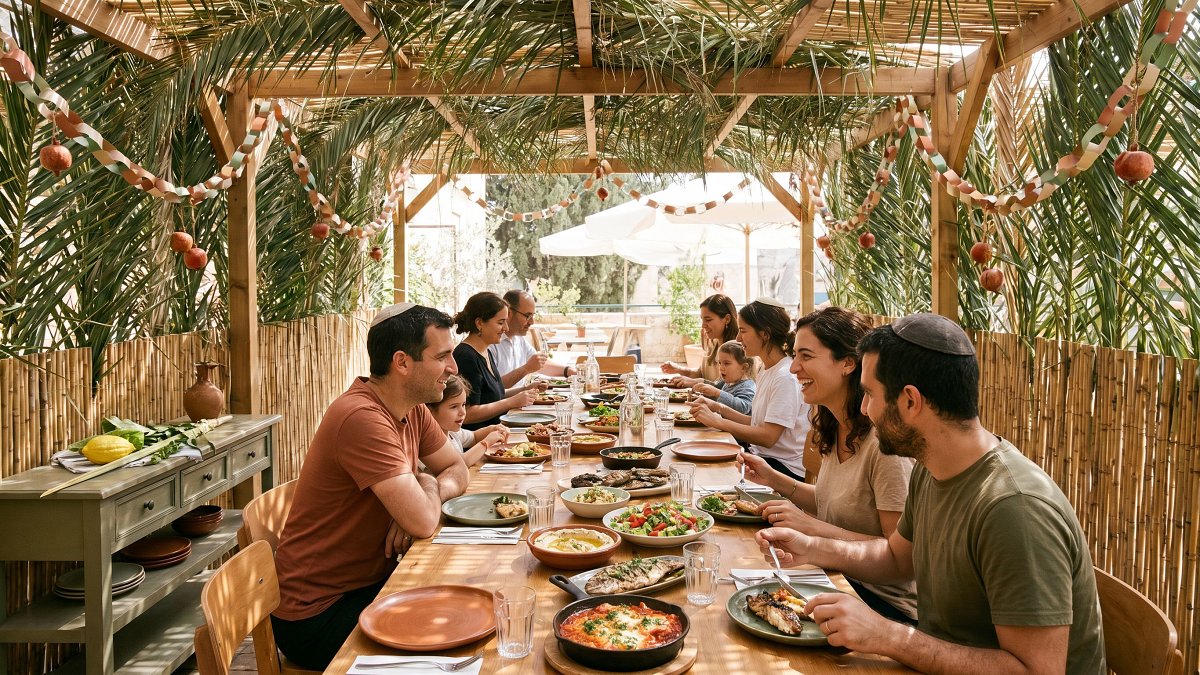
The Jewish calendar drives the booking pattern in Israel the way nothing else does, and the holiday layer is the most distinctive corner of kosher occasion dining Israel. Sukkot weeks are the single busiest restaurant period of the year for kosher houses; rooms with a halachically valid sukkah on the terrace fill weeks ahead. The Beteavone restaurant guide publishes an annual list of kosher Israeli restaurants operating a sukkah, including Meatkitchen on Ygal Alon 65 in Tel Aviv and Resto which welcomes guests into a built sukkah on its terrace. The cafe chain Biga runs sukkahs at its Sarona Market branch in Tel Aviv as well as Ashdod and Petach Tikva, per the Jerusalem Post's annual Sukkot dining roundup.
Shabbat dining in Israel is its own engineering problem. The vast majority of kosher hotel a la carte restaurants in Tel Aviv close for Friday evening; the Shabbat meal moves to the hotel buffet, which is served at most larger properties and reopens Saturday evening after sundown. Visit Tel Aviv's restaurant hotels guide describes the Friday night buffet as a fascinating experience, with families and tourists greeting Shabbat together at long tables. The hotels that consistently do this well include the Ritz-Carlton Herzliya (Herbert Samuel kosher kitchen), the Tel Aviv Hilton (Chloelys), the Carlton (Blue Sky, Lumina), the Sheraton Tel Aviv (Olive Leaf), the InterContinental David Tel Aviv (Aubergine), and the Mendeli Street (Mashya).
Lifecycle moments are the third holiday-adjacent category inside kosher occasion dining Israel, from a brit milah breakfast for 30 to a sheva brachot dinner for 18 to a bar mitzvah lunch for 80. They demand a kosher venue that can stand up the catering, the supervision letter, the dietary letter for the rabbi who will not eat anywhere without one, and the timing for the speeches. The TaamTaam concierge handles these as a separate workflow and routes guests to a private dining room or a fully bought-out kosher restaurant. Qumran in Tel Aviv runs a private events room with a 15% happy-hour discount Sunday through Thursday 19:00 to 20:00; Bella Osteria, POUPÉE, and SPHERA all take buyouts via Ontopo for groups over 30. Inbal Hotel Jerusalem is the regular venue for sheva brachot weekends when the family wants the synagogue, the Shabbat elevator, and the kosher restaurant in the same building.
The Eilat answer matters for late-summer family vacations when both the parents and the in-laws want a Red Sea week. Herods Boutique Hotel Eilat runs every restaurant under the Eilat Rabbinate, with the Amirim and Nivet rooms as the practical default. The Dan Eilat and the Herods Vitalis (adults only) round out the kosher fine-dining picture for an anniversary trip; both fill four to six weeks ahead for chag periods. The Holidays hub will publish a dedicated pillar that maps every chag (Pesach, Shavuot, Rosh Hashanah, Yom Kippur break-fast, Sukkot, Hanukkah, Purim, Tu BiShvat) against the rooms that handle it credibly, and against the lead time required to book.
When to use the TaamTaam concierge for kosher occasion dining Israel
The Ontopo platform handles the everyday case well: a chef-led kosher room, a two-top on a Tuesday night, a normal reservation. The concierge is built for the cases Ontopo does not surface, which is where kosher occasion dining Israel routinely demands a human in the loop. There are roughly five recurring scenarios.
First, the mashgiach confirmation call. When the family member with the strictest standard will not eat from a kitchen without speaking to the supervisor first, the concierge runs that call and reports back which dishes the mashgiach will prepare on a separately supervised tray. The website rarely lists this; the answer comes from the supervisor's WhatsApp.
Second, the same-day availability hunt. Around 4 PM on a Friday, when a couple decides they want a Saturday night anniversary table and every Ontopo slot for Wine Garden, Goshen, and POUPÉE is gone, the concierge calls the houses that hold a few tables off the platform for direct calls. Most credible Tel Aviv kosher kitchens hold 15% to 20% of their Saturday capacity for the phone.
Third, the large-table coordination. A table of 14 with three high chairs, one allergy, two Chalav Yisrael guests, and a 19:00 hard stop for the synagogue afterward is not an online booking, it is a five-call coordination problem. The concierge runs it.
Fourth, the sukkah seat. Sukkot week, the question is not what's good, the question is who has the seat available in the sukkah this Tuesday at 13:30 for a family of 6 from Boston staying at the Carlton. Beteavone publishes the list; the concierge calls down it until somebody has the seat.
Fifth, the dessert-and-cab handoff. The dinner ran 2 hours 40 minutes and the conversation is not done. The concierge books the post-dinner dessert room within walking distance and confirms a Gett cab at the new finish time, with a soft handoff in Hebrew the diner does not have to make.
The service is free to the guest because the brand monetizes through restaurant relationships, not through the diner. No commission per booking is paid by the diner. The concierge does not push partner restaurants; the booking goes to the right kosher room for the brief, full stop.
Three typical bookings the TaamTaam concierge runs each season
The concierge workflow is the best way to make kosher occasion dining Israel concrete. Three illustrative bookings, each typical of one hub, show how the prep actually unfolds.
A typical first-date kosher dinner at Wine Garden in Nahalat Binyamin: a Sunday evening, two diners in their early thirties, both keeping Rabbanut Mehadrin, one with a hard nut allergy, one with a strong preference for Israeli boutique wines. The concierge confirms the wine list with the sommelier team, books a corner two-top facing the open kitchen rather than the door, requests the nut-free dessert tasting, and puts a late cab on hold. Total prep time for the team: around 18 minutes of phone work, all done the morning of the booking. The dinner typically runs past 23:00 and the conversation keeps going, which is why a soft cab handoff matters at the end of the night.
A typical multi-generational Friday night Shabbat dinner at the Inbal Hotel Jerusalem: a family of 11 with three generations, the matriarch keeping Edah HaChareidis Badatz, two grandchildren under 8 with separate booster-seat needs, and an uncle visiting from Brussels who only speaks French. The concierge books the family table 5 days ahead, confirms the Mehadrin tray separately with the kitchen, arranges the booster seats, requests a French-speaking server, and pre-confirms the Shabbat elevator and the in-house synagogue with the front desk. Total prep time: around 41 minutes spread across two phone calls and one email. The most common outcome the team hears back on is that the stricter matriarch eats from the kitchen for the first time at a non-family Shabbat meal in years.
A typical business client kosher dinner at West Side in the Royal Beach Hotel: three diners, one Israeli host, one observant Jewish client flying in from Frankfurt for a short visit, one non-Jewish American partner who has never eaten kosher and is curious. The concierge books the sea-view balcony for sunset that week, confirms the Mehadrin status of the kitchen for the German guest, briefs the server to explain each course's kashrut detail to the American partner as part of the experience, and confirms a wine pairing focused on Galilee and Judean Hills producers the American partner can remember and order later. Total prep time: around 24 minutes. The pattern the team sees is the German guest requesting the same room on the next quarterly visit.
These three are typical, not exceptional. The pattern across all three is the same: a 20-to-45-minute prep window, two or three phone calls, one tray-level kashrut confirmation, one logistics handoff at the end of the night. That is the entire concierge product behind every kosher occasion dining Israel booking the team runs.
How TaamTaam keeps these recommendations honest
The directory's editorial method is the reason a kosher occasion dining Israel recommendation in this article should carry weight. Six discipline checks run on every restaurant before it appears on the site or in the concierge's booking script.
- Supervisor verified. The exact kashrut authority on the door is verified directly with the supervising body, not from a Google photo. For Edah HaChareidis listings, the Badatz registration number is checked against the public list. For Rabbanut listings, the certificate validity is confirmed with the local rabbinate.
- Halav Israel status confirmed. Every dairy listing carries an explicit Halav Israel yes or no. The directory does not default to Chalav Stam without flagging it; the metadata field is mandatory.
- Separate-meat hechsher logged. When a restaurant carries a separate meat certification on top of its base kosher status, that certification is logged as its own field. A diner keeping a stricter meat standard than dairy standard can filter on it.
- Vegetable compliance noted. Bug-free leaf protocols (the rinse, the inspection, the supplier) are noted per restaurant, because that is where Badatz and Rabbanut diverge in practice.
- Critic-reviewed. Every TaamTaam recommendation is reviewed by the in-house critic team before publishing. No paid placement is disguised as review. Affiliate links are absent because the brand monetizes through restaurant relationships, not through the diner.
- Refreshed quarterly. The directory runs a 90-day refresh cycle; supervisor changes, hechsher upgrades, certification suspensions, and closures are reflected in the listing within that window.
The roadmap extends this discipline to kosher hotels, kosher wineries, kosher wine routes, and the geographic expansion to Paris, New York, and Miami. The same six checks run on every new listing regardless of geography.
A weekly sequence across the Occasions family
The family is built to be read in sequence over a single planning week, not as a one-time landing. A typical week the concierge sees a planner work through looks like this. Sunday, the date-night article for next Wednesday. Monday, the family-table article for the in-laws arriving Thursday. Tuesday, the business article for the Frankfurt client landing Sunday morning. Wednesday, the holiday article for the Sukkot week three weeks out. Friday, a quick read on the post-shul lunch options for next Shabbat in Tel Aviv. The pillar lives one click above all four; the hubs sit below and answer the specifics of the kosher occasion dining Israel calendar week by week.
The sister family in the TaamTaam map is Itineraries, the magazine-style guide to discovering kosher Israel one neighborhood at a time, which adds the where-to-walk-after layer to every occasion booking. The two families are designed to be cross-read: a date night in Florentin reads better with the Florentin walking route open in another tab, and a Friday lunch in the Tel Aviv Port reads better with the Port route open.
FAQ: kosher occasion dining Israel
What does kosher occasion dining Israel mean in practice for a visitor?
Kosher occasion dining Israel describes the editorial discipline of choosing the kosher table that fits the moment, not just the cuisine. For a visitor, that means three things: a kashrut standard the strictest member of the table will eat from, a room style that matches the occasion (intimate two-top for a date, long banquette for a family of 12, balcony with a Mediterranean view for an anniversary), and a booking handled with enough lead time that the supervisor and the specific table can be confirmed. TaamTaam organizes the recommendation around the occasion first and the cuisine second, because that is how observant diners actually decide.
Which kashrut authority should I prioritize when booking?
The answer depends on the strictest standard at the table. Rabbanut is the Israeli chief rabbinate baseline that every certified restaurant carries; Mehadrin is the next tier with stricter meat and ingredient rules; Badatz, particularly Edah HaChareidis, is the private-court tier with full-time mashgiach presence, glatt-and-above meat, and stricter bug-free leaf protocols. If anyone at the table eats only Badatz, the room either has to carry Badatz on the door or the kitchen has to agree to prepare that diner's tray separately under direct supervision. The concierge runs that call before confirming the booking.
How far ahead should I book a kosher Shabbat meal at an Israeli hotel?
Minimum 3 to 5 days ahead during ordinary weeks, and a minimum of 2 weeks ahead during chag periods (Pesach, Shavuot, Rosh Hashanah, Sukkot, Hanukkah). The kosher hotel Shabbat buffet is the most popular kosher restaurant booking in Israel by volume, and the largest properties (King David, David Citadel, Inbal, Waldorf Astoria Jerusalem in Jerusalem; Hilton, Carlton, Sheraton, InterContinental David in Tel Aviv) fill the high-demand Friday nights weeks before the date. Same-day booking is almost never possible for a table of more than 4.
Are there kosher restaurants in Israel with a halachically valid sukkah during Sukkot?
Yes, and the list refreshes every year. The Beteavone guide and the Jerusalem Post's annual Sukkot dining roundup are the two reliable English-accessible sources, and the YeahThatsKosher master list also covers Israel. The TaamTaam concierge runs the sukkah-seat hunt during Sukkot week as a dedicated workflow, calling down the live list of kosher kitchens with covered sukkahs until the right seat is available for the right party size.
Can the TaamTaam concierge handle a private event or buyout?
Yes. Bar mitzvah lunches, sheva brachot dinners, anniversary buyouts of 30 to 80 guests, brit milah breakfasts, and corporate retreats all run as a separate workflow inside the kosher occasion dining Israel concierge. The team handles the supervisor letter, the dietary letters for guest rabbis, the booster-seat and high-chair counts, and the run-of-show including the timing of speeches. The service is free to the guest. Lead time of 4 to 8 weeks is recommended for events of 30 guests or more.
What is the difference between a kosher concierge and an online booking platform like Ontopo?
Ontopo is excellent for the everyday two-top and four-top booking at a chef-led kosher kitchen during normal hours. The concierge is for the cases the platform does not cover: tray-level kashrut confirmation with the mashgiach, same-day availability when the platform shows zero, large tables that need coordination across multiple constraints, sukkah seats during Sukkot week, and end-of-night logistics like a dessert handoff and a cab. The two are complementary, not competing; the concierge starts from the Ontopo inventory and adds the layer above it.
How TaamTaam serves the observant diner planning a kosher occasion
The TaamTaam concierge runs as a free editorial service alongside the directory of 143 verified kosher restaurants. The team is built around three offerings, each one mapped to a category of booking the platform alone cannot close inside the kosher occasion dining Israel landscape.
Editorial discovery. The TaamTaam editorial team publishes occasion-led guides like this one, plus the Itineraries family that maps Israel neighborhood by neighborhood, plus the Michelin-style critic reviews on each restaurant page. Average reading time across the directory is 6 minutes per piece, and the editorial discovery layer is what an observant diner uses to narrow 143 restaurants down to the 3 that fit the brief.
Free booking concierge. The concierge handles the call to the mashgiach, the same-day availability hunt, the large-table coordination, the sukkah seat during Sukkot, and the lifecycle event buyout. The product is free to the diner because the brand maintains direct relationships with the restaurants, not commissions per booking. Average concierge prep time per booking sits between 18 and 41 minutes, depending on complexity.
Direct mashgiach access. For the diner who needs to confirm a tray-level kashrut detail before the booking, the concierge runs a direct call to the supervisor. This is the layer Ontopo and the general booking platforms do not expose at all, because they treat kosher as a tag. TaamTaam treats it as the spine of the recommendation.
The roadmap adds kosher hotels (booking, kashrut detail, Shabbat-friendly amenities), kosher wineries (visits, tastings, the wine-route layer for an anniversary weekend), and the geographic expansion beyond Israel to Paris, New York, and Miami. Every new listing carries the same six-check editorial discipline that runs on the Israeli inventory today.
Conclusion
Kosher occasion dining Israel is a problem that lives at the intersection of the kashrut filter and the occasion filter, and the right room is the one that earns both at once. The four hubs in the Occasions family answer the four largest categories of booking the TaamTaam concierge sees: Date Nights, Family Tables, Business and Solo, Holidays and Lifecycle. The next read depends on the occasion in front of you. If the next dinner is a first date in Tel Aviv, the date-nights hub holds the door. If it is an anniversary in Jerusalem, the anniversary-tables article opens the room. If it is the family Shabbat with the in-laws and the toddlers, the Family Tables hub will publish its dedicated pillar soon. If it is a Sukkot lunch with the visiting cousins from Boston, the Holidays hub will publish its calendar. The map is the pillar; the next click is the table. Kosher occasion dining Israel is the family this site is built to read first.
Sources
- Best Kosher Restaurants in Tel Aviv and Surrounding Areas 2026 : Tourist Israel, 2026
- Restaurant Hotels in Tel Aviv : Visit Tel Aviv, 2024
- Best Kosher Restaurants in Tel Aviv on Ontopo : Ontopo, 2026
- 02 Restaurant page at Inbal Hotel Jerusalem : Inbal Hotel Jerusalem, 2025
- Luxury and Tradition: My Journey Through the Years at The Inbal Hotel in Jerusalem : Mark Around the World, 2024
- Restaurants With Sukkah Archives : Beteavone, 2024
- Best Kid-Friendly Kosher Restaurants in Tel Aviv : Kosher in Tel Aviv, 2025
- Kosher Guide to Hotels and Restaurants in Tel Aviv : Plan it Israel, 2025
- A Kosher Traveler's Guide to Hotels and Restaurants in Jerusalem : Plan it Israel, 2025
- What's open, what's kosher, and where's the sukkah? Sukkot and Hol Hamoed dining : Jerusalem Post, 2024
- Navigating the Israeli Kosher Restaurant Scene: Understanding Kashrut Certifications and Logos : YeahThatsKosher, 2021
- Restaurants at Herods Boutique Hotel Eilat : Herods Hotels, 2025