
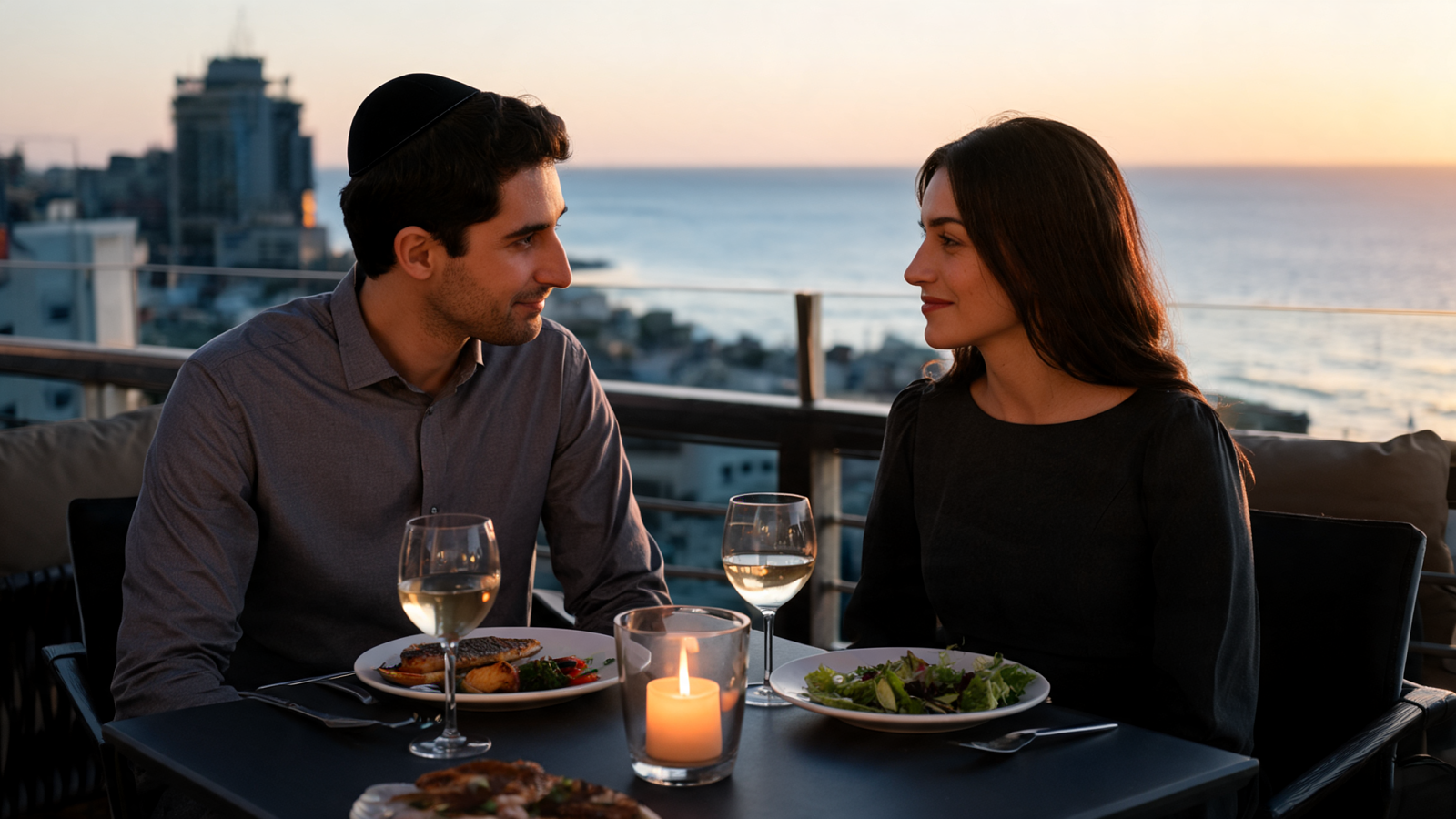
A first trip Israel observant couple week works when the dinner reservations are locked before the flights are booked, not after. The scenario is narrow: two observant travelers, seven nights, landing jet-lagged at Ben Gurion, splitting the week between a Tel Aviv hub and a Jerusalem hub, with one northern day, one coast half-day, and one Shabbat to plan. Every evening earns a single anchor table, and the daytime bends around it. The short list this guide defends: Regina in Tel Aviv for the arrival night, Katzir at The David Kempinski, the Rooftop at Mamilla Hotel in Jerusalem, a Galilee winery lunch, Aresto at Caesarea Port, and a hotel Shabbat with a mashgiach (the on-site kosher supervisor) you have already spoken to. Israel drew 1.3 million tourists in 2025, and the observant ones plan the meals first.
Key takeaways
- Israel welcomed 1.3 million visitors in 2025 and 51% identified as Jewish, down from 66% in 2024, according to the Israel Ministry of Tourism; the observant traveler is the core audience here, not a niche.
- Book one anchor dinner per evening before departure, then have the TaamTaam concierge confirm the live hechsher (kosher certification) within 48 hours of each reservation.
- Jerusalem is almost entirely kosher; Tel Aviv is not, so the arrival-night table needs verification, never assumption.
- Keep the arrival-night and Friday dinners within a five-minute walk of the hotel; jet lag and Shabbat both punish long transfers.
- Average visitor stay fell to 9.3 nights in 2025 from 11.4 in 2024 (Israel Ministry of Tourism), so a seven-night trip is now standard and leaves no room for a wasted evening.
- International visitor satisfaction reached 88% in 2025 and 83% would recommend Israel (Israel Ministry of Tourism); the average tourist spent $1,622 that year, up from $1,427 in 2024.
Building the first trip Israel observant couple week around dinner
Most guides to a first trip Israel observant couple week sequence the days around sites and treat dinner as whatever is open nearby. The Masa Israel kosher vacation guide and Gil Travel's first-timer guide both lead with itinerary and Shabbat logistics, then handle meals in the abstract. That inversion costs the best tables, because the strongest kosher kitchens in Tel Aviv and Jerusalem fill their Thursday and motzaei-Shabbat seatings two to three weeks out. Design the week the other way. Fix the seven anchor dinners first, then slot the Old City, the Galilee, and the coast into the daylight around them. The observant share is no side note: 51% of 2025 visitors identified as Jewish and the pilgrim share climbed from 5% in 2024 to 9% in early 2025, according to the Israel Ministry of Tourism.
The discipline that separates a smooth week from a scramble is verification. TaamTaam's own concierge service notes from May 2026 log the same three failure points on repeat: a restaurant whose certification lapsed between booking and arrival, a dairy kitchen booked for a meat-craving group, and a Friday table that closed hours earlier than the couple assumed. Six checks close all three gaps.
- Hechsher level. Confirm whether the kitchen runs under Rabbanut, Rabbanut Mehadrin, or a badatz (an independent strict supervision such as Badatz Eda Chareidis). Match it to your own standard before you book.
- Halav Israel status. For dairy venues, verify Halav Israel (milk supervised from milking) if you keep it; many Tel Aviv cafes do not.
- Meat or dairy. Fix the category per evening so the week alternates and no one is surprised at the table.
- Walking distance. Measure the hotel-to-table walk for the arrival night and for Friday, when driving is off the table.
- Shabbat and chag closures. Check Friday and Saturday hours; most kosher kitchens shut for Shabbat and reopen only after nightfall.
- Concierge confirmation. Have TaamTaam call the mashgiach directly to confirm the certificate is live, not framed on a wall from last year.
| Evening | City or area | Anchor table | Kashrut note | Book ahead |
|---|---|---|---|---|
| Arrival night | Tel Aviv | Regina, Old Tahana | Meat, mehadrin | 2 weeks |
| Day 2 | Tel Aviv, Sarona | Biga | Dairy | 1 week |
| Day 3 | Tel Aviv | Katzir, The David Kempinski | Hotel kitchen | 2 weeks |
| Day 4 | Jerusalem, Mamilla | Rooftop at Mamilla Hotel | Jerusalem Rabbinate | 3 weeks |
| Day 5 | Galilee or Golan | Winery lunch | Mehadrin varies | 1 week |
| Day 6 | Caesarea Port | Aresto | Dairy | 3 days |
| Shabbat | Jerusalem hotel | Hotel Shabbat package | Glatt, confirm | 4 weeks |
The arrival night, the table that earns the jet lag
The arrival night is the one dinner you cannot improvise. A couple landing at Ben Gurion after an eleven-hour flight has roughly a three-hour window before jet lag turns dinner into a chore, so the table has to be booked, close, and certain. Regina, the meat restaurant in Tel Aviv's Old Tahana compound, is the reference arrival table: mehadrin certification, a short taxi from the beachfront hotel cluster, and a kitchen that seats late. Keep it within a five-minute walk if the hotel sits in the same district, because a jet-lagged pair will cancel a thirty-minute transfer and eat gas-station snacks instead. Book it two weeks out, and have the concierge reconfirm the hechsher and the seating time the day before you fly. This is the mechanics covered in depth in booking the arrival-night dinner in Tel Aviv when jet lag and Shabbat collide, the companion piece for anyone landing on a Thursday.
One practical hedge: stock the room before the first dinner. A quick stop at a tourist-friendly kosher supermarket in Tel Aviv for the hotel pantry covers the breakfast the hotel may not, and it removes the pressure of a jet-lagged first morning. A first trip Israel observant couple week rarely fails on the marquee dinners; it fails on the unplanned first morning.
Three Tel Aviv anchor dinners, booked before you land
Tel Aviv is where the week gets its range, and where the kosher map is least intuitive. Unlike Jerusalem, most Tel Aviv restaurants are not kosher, so the three anchor dinners have to be chosen and certified in advance. Start with glatt (a stricter standard for kosher meat) at a hotel kitchen: Katzir at The David Kempinski Tel Aviv runs a supervised kitchen and seats non-guests, which makes it a safe day-three table when energy is still high. Balance it with a dairy night at Biga in the Sarona compound, where the setting carries a casual dinner without a heavy meat menu. Reserve the third night for a mehadrin (a higher supervision standard) table such as Regina again, depending on the standard you keep.
Plan it Israel's kosher guide to Tel Aviv hotels and restaurants makes the same point from the concierge side: the pleasant tables book out, and walk-ins take the leftover slots. Reserve all three before departure. Couples wanting a tighter city stretch should read a three-day Tel Aviv long weekend for the visiting observant couple, which compresses the same anchors into a single weekend. Treat the first Friday night in Tel Aviv as its own event: an early candle-lighting, a short walk to shul, and a hotel meal already ordered.
Jerusalem after dark: the Old City evening and the Mamilla night
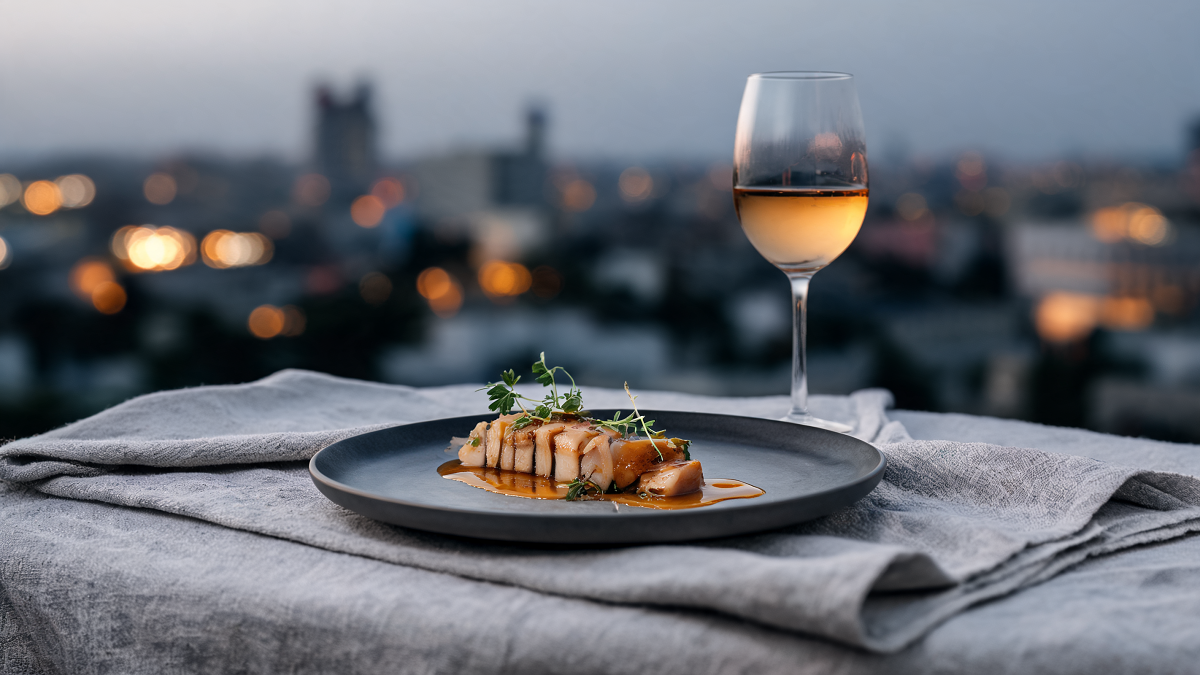
Jerusalem inverts the Tel Aviv problem: almost every restaurant is kosher, so the choice is about the room and the view, not the certificate. Two evenings define the Jerusalem hub. The first is the Mamilla night. The Rooftop at Mamilla Hotel, under the Jerusalem Rabbinate, serves a supervised menu above the Old City walls, a three-minute walk from Jaffa Gate, and it is the single most quotable dinner of the week for a first-timer. The second is the Old City evening itself: an early dinner at Happy Fish on Mamilla Boulevard, then the walk down to the Kotel after dark, when the plaza is quiet.
For daytime, the market-adjacent kitchens carry the afternoon. Machneyuda near the Machane Yehuda market and Eucalyptus near the Old City are the two names first-timers hear most, and both hold supervision. Observant couples who want to build the day around ritual can follow a mikveh meal route in the morning, timing a visit and a light supervised lunch before the afternoon heat. Pairing the shul with the meal is its own small craft, covered in pairing the right synagogue with the right post-shul kosher lunch.
One northern day: Tiberias table or Galilee wine country
One full day belongs to the north, and the best version of it is built around a winery lunch rather than a rushed drive. The Golan Heights Winery visitor center near Katzrin runs tours and tastings and anchors a Golan day. In the Galilee, Abouhav Winery sits in a 600-year-old building in the Old City of Safed and pours a tasting of three mehadrin wines for 40 NIS, a low-commitment stop that pairs with a walk through the artists' quarter. Adir Winery in Merom HaGalil adds a dairy angle: it tastes cheeses from its own dairy alongside the wine, and light meals can be ordered, which solves the midday kosher question in a region with few sit-down options.
Keep the northern day loose. The drive from Tiberias to the Golan wineries runs under an hour, but Friday closures come early, so a Sunday-to-Thursday slot protects the plan. A first trip Israel observant couple week that tries to add the north on a Friday usually loses the lunch to a locked gate.
Caesarea or Herzliya, the half-day on the coast
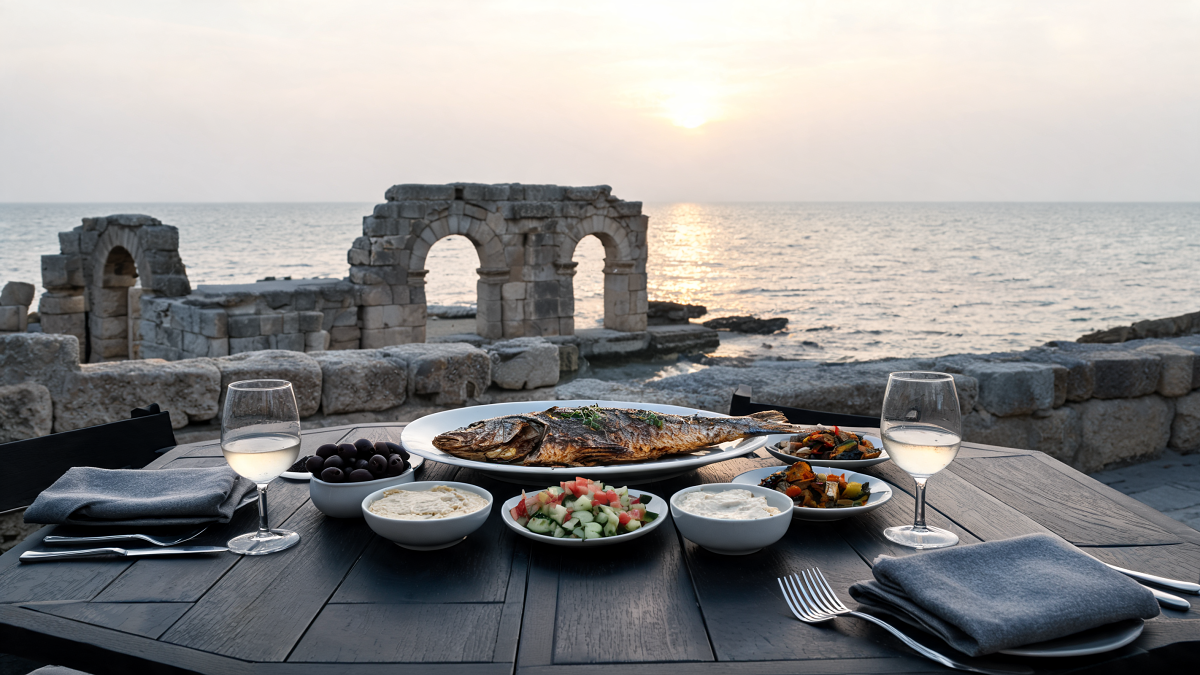
The coast is the half-day that resets the pace between the two hubs. Caesarea Port is the more scenic of the two options: Aresto, a dairy restaurant with a taboon oven, and the neighbouring Port Cafe both sit against the Roman harbour, and the ruins fill the hours before lunch. The full version of that afternoon is laid out in a half-day for two in Caesarea that ends at the harbor, which routes the ruins, the beach, and the table into one clean loop.
Herzliya Marina is the alternative for couples staying north of Tel Aviv. Lechem Basar, a marina meat grill under the supervision of Rabbi Mahfoud, and Herbert Samuel at the Ritz-Carlton Herzliya both overlook the yachts, and both hold certification a first-timer can trust. Either coast slot works as a half-day; neither should eat an evening that a hub dinner already owns.
Planning Shabbat: hotel structure or a family table
Shabbat is the fixed point the rest of the week orbits, and there are two clean structures. The first is the hotel Shabbat: a Jerusalem or Tel Aviv hotel with a Shabbat elevator, pre-ordered glatt meals, and a shul within a five-minute walk. Gil Travel's Shabbat guide for kosher travelers describes the standard package, and it is the safer choice for a first trip when neither traveler knows the city's Friday rhythm. Confirm the meal package and the candle-lighting time four weeks out, because hotel Shabbat seatings for observant guests fill first.
The second structure is a family or community table, arranged through a local host, or a Kabbalat Shabbat at the Kotel followed by a communal dinner. It is warmer and less predictable, and it rewards couples who have done this before. Whichever you choose, treat transport as a solved problem before Friday: an observant trip needs a rental car and driver arranged so that no leg of Shabbat depends on driving, and the return to the hotel is always on foot. A first trip Israel observant couple week is judged, in the end, on whether Shabbat felt calm or improvised.
FAQ: your first observant week in Israel
How many nights should a first trip Israel observant couple week run?
Seven nights is the standard, and it matches the market: the average visitor stay was 9.3 nights in 2025, down from 11.4 in 2024, according to the Israel Ministry of Tourism. Seven nights covers a Tel Aviv hub, a Jerusalem hub, one northern day, one coast half-day, and one Shabbat without rushing. Fewer than six nights forces you to drop either the north or the coast, and the trip loses its balance.
Do I need to book kosher restaurants in Tel Aviv in advance?
Yes. Most Tel Aviv restaurants are not kosher, so the supervised kitchens are a smaller pool and they fill their best seatings two to three weeks out. Book all three Tel Aviv anchor dinners before departure and confirm each hechsher within 48 hours of the reservation. Walk-ins in Tel Aviv routinely get turned away from the tables worth wanting on a Thursday night.
Is everything in Jerusalem automatically kosher?
Almost, but not entirely. The overwhelming majority of Jerusalem restaurants hold certification, which is why the city is the easy half of the week. Even so, confirm the supervision level and whether it meets your standard, since Rabbanut, Rabbanut Mehadrin, and badatz certifications sit at different strictness. The certificate should be current and posted, not a photograph from a prior year.
How do observant couples handle transport without driving on Shabbat?
Arrange a rental car and driver for the weekday legs, then park it from candle-lighting to nightfall on Saturday. Choose a hotel within a five-minute walk of a shul so Shabbat needs no vehicle at all. The transport question is worth solving before the trip, not on the ground, because a Friday scramble for a Shabbat-compatible plan is the most common avoidable stress of the week.
What is the single most common first-trip dinner mistake?
Assuming a table is kosher because it looks the part. Certification lapses, dairy kitchens masquerade as meat destinations in a tired traveler's memory, and Friday hours close earlier than expected. Every anchor dinner should be booked, categorized as meat or dairy, and confirmed with the mashgiach before you land.
How TaamTaam plans your first trip Israel observant couple week
TaamTaam exists for exactly this scenario: an observant couple who wants the certification settled and the tables booked before the plane lands. Three services carry the week.
Curated shortlisting. TaamTaam lists 143+ verified kosher restaurants across 8 Israeli cities, with active coverage in Tel Aviv, Jerusalem, Caesarea, and Herzliya. Each listing reports its supervising body, certification level, Halav Israel status, and whether it runs meat or dairy, so the shortlist is built on data, not guesswork.
Concierge booking and mashgiach access. The free concierge handles the direct booking and places the direct call to the mashgiach to confirm the live certificate, closing the exact gap that sinks most first trips. No coupons, no partner upsell, just the reservation and the verification.
The route, evening by evening. TaamTaam sequences the anchor dinners into a walkable week, one table per night, matched to the hub you are sleeping in, so the daytime plan bends around confirmed meals rather than the reverse.
Subscribe to the TaamTaam weekly newsletter for the current kosher openings, the seasonal tables, and the concierge notes that keep the whole trip booked and confirmed before departure.
Conclusion
A first trip Israel observant couple week rewards the couple who plans the meals first and the sights second. Seven nights, one anchor table per evening, two hubs, one northern day, one coast half-day, and a Shabbat structured for calm: that is the whole framework, and it beats the site-first itinerary every top ranker still publishes. Book the seven dinners, confirm every hechsher, and let TaamTaam close the verification gap so the week runs on tables you can trust.
Sources
Further reading on TaamTaam
- Booking the arrival-night dinner in Tel Aviv when jet lag and Shabbat collide
- A three-day Tel Aviv long weekend for the visiting observant couple
- Pairing the right synagogue with the right post-shul kosher lunch
- A half-day for two in Caesarea that ends at the harbor
- Tourist-friendly kosher supermarkets in Tel Aviv for the hotel pantry
External sources
- Summary of the Ministry of Tourism Activities for 2025 : Israel Ministry of Tourism, 2026
- With 1.3 Million Visitors, Tourism To Israel Began Recovery In 2025 : Forbes, 2026
- Kosher Vacations: The Ultimate Guide to Planning a Kosher Vacation in Israel : Masa Israel, 2026
- What Jewish Travelers Need to Know About Visiting Israel First Time : Gil Travel, 2026
- Shabbat in the Holy Land: What to Expect for a Kosher Traveler : Gil Travel, 2026
- Kosher Guide to Hotels and Restaurants in Tel Aviv : Plan it Israel, 2026
- Wine Tasting in the Golan and Galilee : Galil and Golan, 2026
- Eat and Drink at Mamilla Hotel : Mamilla Hotel, 2026
- Kosher Restaurants at the Herzliya Marina : Herzliya Marina, 2026